Mold in Air Ducts: What It Is, What It Isn't, and What to Do
Mold in a duct system is the one duct problem that scares homeowners most — and the one most often misdiagnosed. This post is the honest version: how to tell mold from dust, what cleaning can and cannot do, and when the job is remediation, not cleaning.
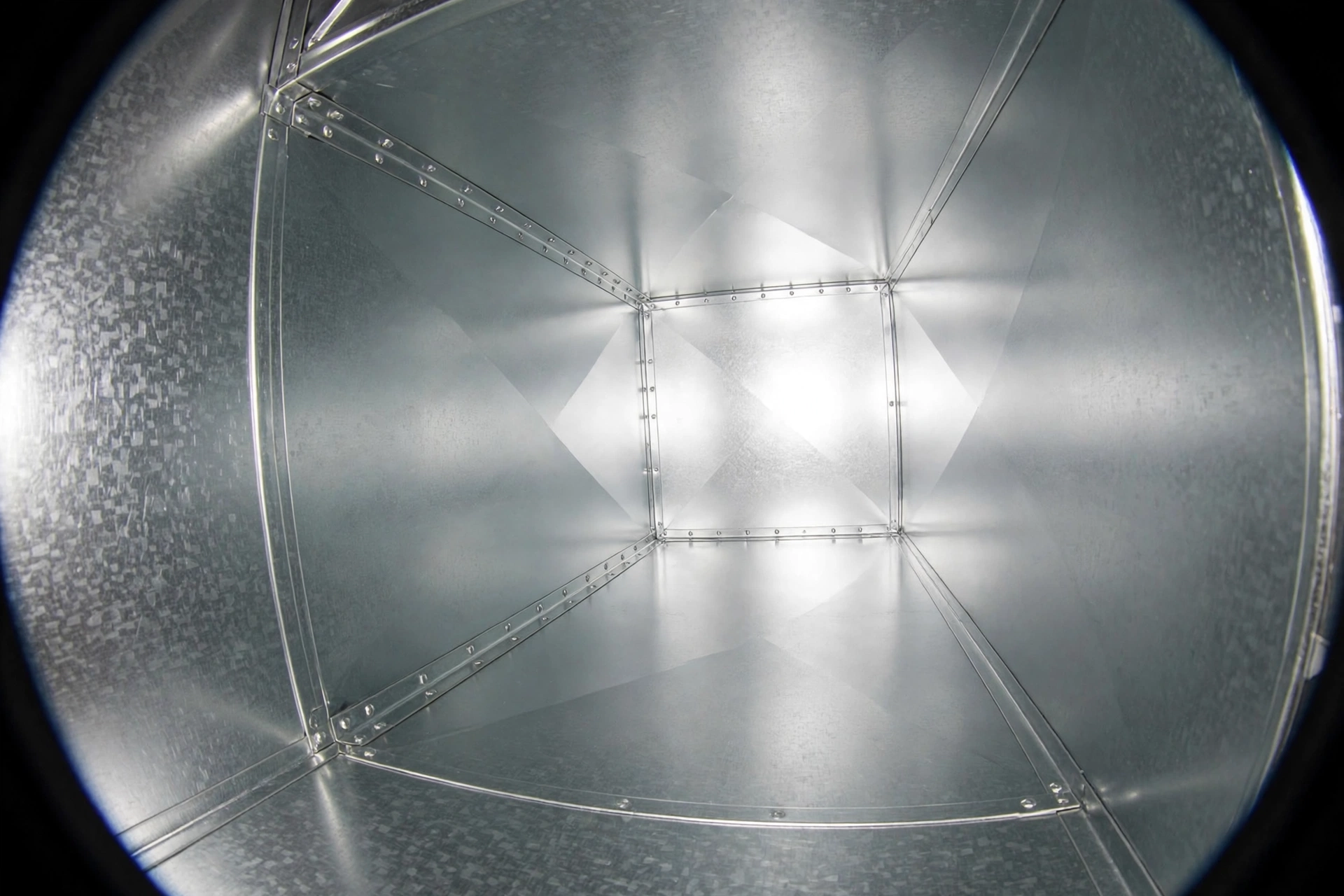
A dark growth inside a duct looks like mold, and it often is — but not always. Dust, soot and biofilm all look dark on camera, and the difference matters: dust cleans off with a rotary brush, mold needs a different protocol, and a moisture problem needs remediation. This post is the guide to telling them apart, and to knowing which job yours is.
How mold gets into ducts
Mold needs three things: moisture, food, and time. The duct system provides all three when the conditions are right. Moisture comes from condensation on the evaporator coil — the coldest surface in the system, where humid Los Angeles air meets cold metal and water forms. Food comes from the dust itself: skin cells, pollen, fabric fiber, all of it organic, all of it mold food. Time comes from the system running for years without inspection. The coil is where it starts, and the ducts are where it spreads — spores carried on every cycle, settling in runs, growing where the moisture collects.
The conditions that accelerate it are specific to Los Angeles: a coil that has never been cleaned, a drain line that is clogged or slow, a system that short-cycles and never dries out, or a duct run in a damp crawlspace. Any one of them turns a clean system into a mold system over a season or two.
Mold vs dust: how to tell
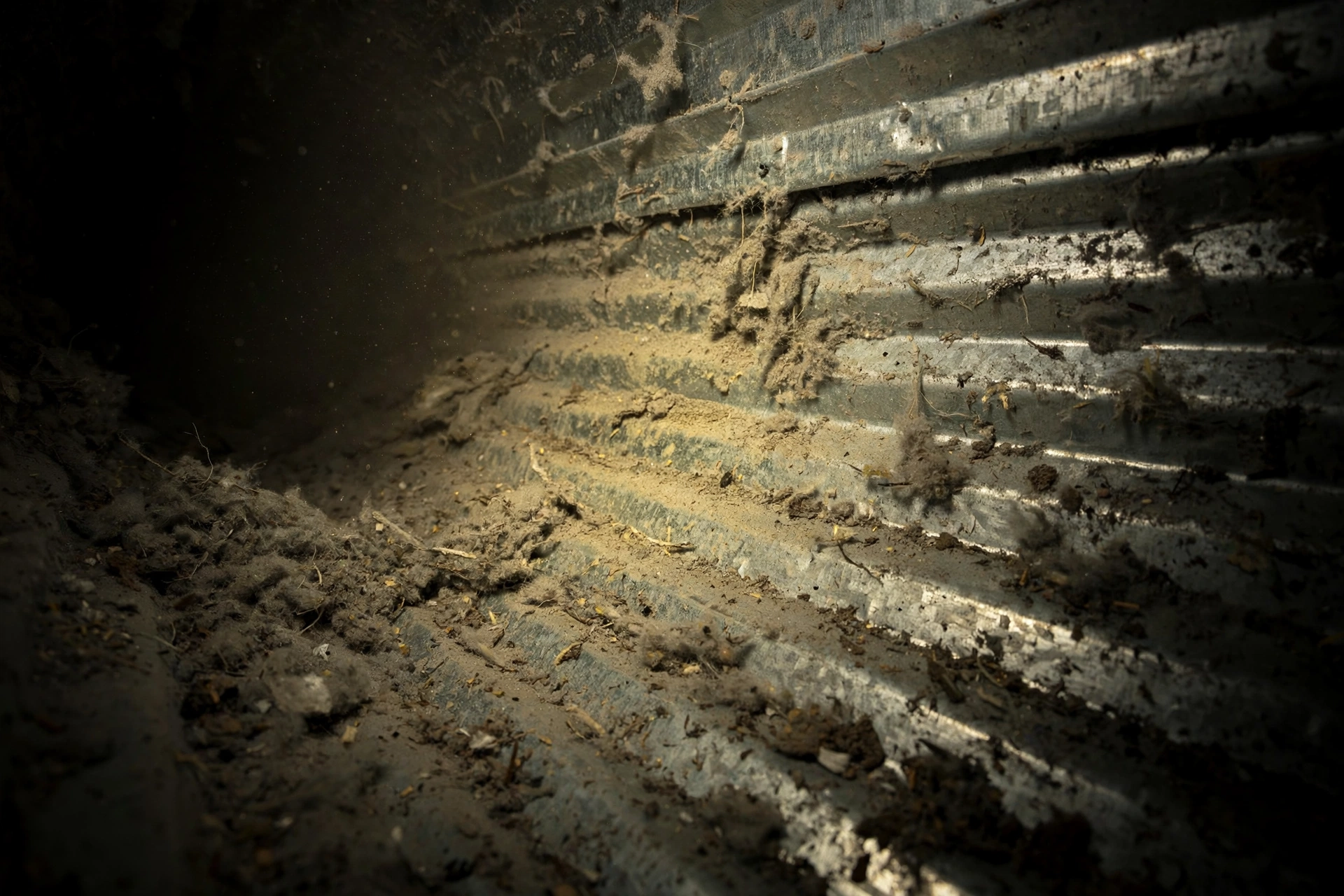
On camera, dust is grey and powdery; mold is dark, often black or green, and grows in patches with a texture — fuzzy, slimy, or crusty — that dust does not have. The smell is the second test: dust has no smell, mold smells musty, earthy, or like a damp basement, and the smell appears when the system runs and fades when it stops. The third test is the location: dust accumulates everywhere in the system, mold concentrates on the coil and in the runs downstream of it, where the moisture is.
The definitive test is a lab sample — a tape lift or a swab sent for analysis — and it is worth doing when the camera shows something that might be mold. The lab tells you the species and the concentration, and the result decides whether the job is a cleaning or a remediation. We take the sample during the inspection when the camera shows growth that needs identifying.
Health signs
Mold exposure through a duct system shows up as respiratory symptoms that are worse indoors: sneezing, itchy eyes, congestion, coughing, asthma flare-ups, and a musty smell that follows the system. The symptoms clear when you leave the house and return when you come back — the pattern that points to the indoor air, and to the ducts as the delivery system. Children, older residents, and anyone with asthma or allergies feel it first and worst.
The health question is also the reason not to panic: most mold in duct systems is common environmental mold, not the toxic varieties that make headlines. The risk is real — respiratory irritation, allergy aggravation, asthma triggers — but it is a risk that cleaning and moisture control address, not a reason to abandon the house. The lab result tells you which mold you have; the inspection tells you where the moisture comes from.
What duct cleaning removes (and what it doesn't)
Duct cleaning removes the mold from the ducts: the growth on the duct walls, the spores in the runs, the biofilm on the coil. It does not remove the moisture source — the clogged drain line, the short-cycling system, the damp crawlspace — and if the moisture source is not fixed, the mold comes back. That is the honest limit of the service, and any company that sells a cleaning as a cure for a moisture problem is selling you a repeat job.
The full fix is two jobs: the cleaning, and the moisture repair. We do the cleaning, we identify the moisture source on camera, and we tell you what the repair is — a drain line cleared, a system tuned so it dries out between cycles, a crawlspace dried. The repair may be ours or may be another trade's; either way, the cleaning without the repair is a temporary fix, and we say so before we start.
When you need remediation, not cleaning
Remediation is the job when the mold has spread beyond the duct system — into the wall cavities, the insulation, the drywall — or when the moisture source is structural: a roof leak, a plumbing leak inside a wall, a flooded crawlspace. Remediation is containment, removal of affected materials, drying, and rebuilding, and it is a licensed remediator's job, not a duct cleaner's. The camera inspection is what distinguishes the two: mold confined to the ducts and the coil is a cleaning; mold in the walls is a remediation, and we will tell you which one you have and refer you to a remediator when it is the second.
Prevention: humidity, filters, leaks
After the cleaning, the prevention is straightforward: keep the humidity down, change the filter on schedule, and fix leaks fast. The coil drain line cleared annually. The filter changed every 1–3 months, MERV matched to the system. The crawlspace dry. The system tuned so it runs long enough to dehumidify and dries out between cycles. And the camera inspection every few years, so the next growth is caught when it is a patch on the coil — not a system full of it.
Want us to look at yours?
A camera inspection tells you in 20 minutes what your ducts actually look like — free, no obligation, and you keep the footage.
Frequently asked questions
What are the symptoms of mold in air ducts?
Can duct cleaning remove mold?
How do I know if it is mold or dust in my ducts?
How Much Does Air Duct Cleaning Cost
Where we work
Keep reading
Is Duct Cleaning a Waste of Money?
The EPA says routine cleaning is not proven necessary for every home. It also says cleaning is worth it when there is a reason. This post is the reason list — and the scam list.
Read the guide → How Often Should Air Ducts Be Cleaned
The short answer is 3–5 years. The real answer is: it depends on what has happened to your house since the last cleaning — and Los Angeles gives your ducts more to deal with than most cities.
Read the guide →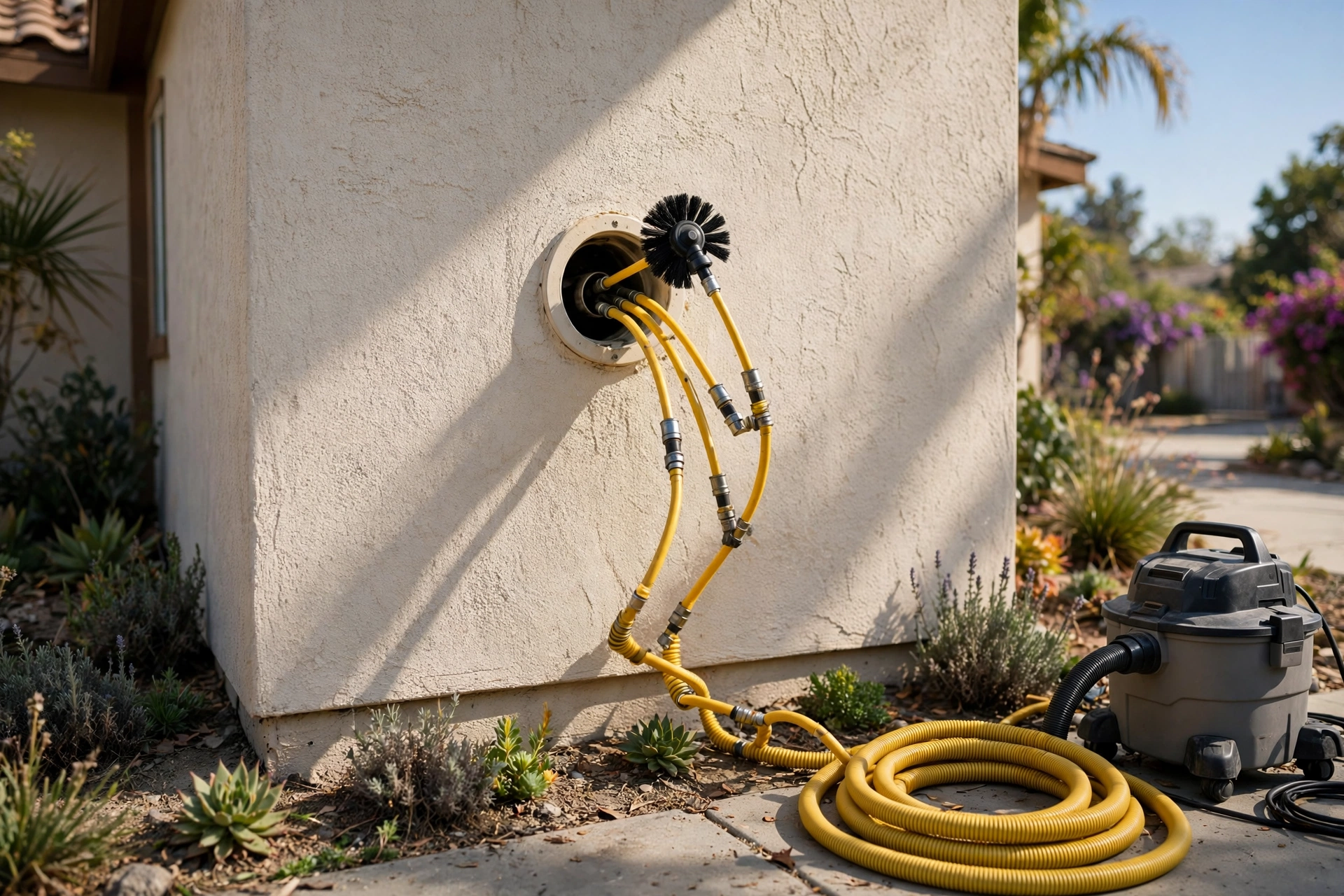
How Often Should You Clean
Once a year, minimum. Lint is fuel, the vent run is where it accumulates, and a clogged dryer vent is the leading cause of dryer fires. The signs, the schedule and the honest DIY limits are below.
Read the guide →