Air Duct Cleaning in Eagle Rock, CA
The emptiest city SERP in the set — no local operator page in the organic Top 10. A real cleaning with a camera is the only local operator page in Eagle Rock.
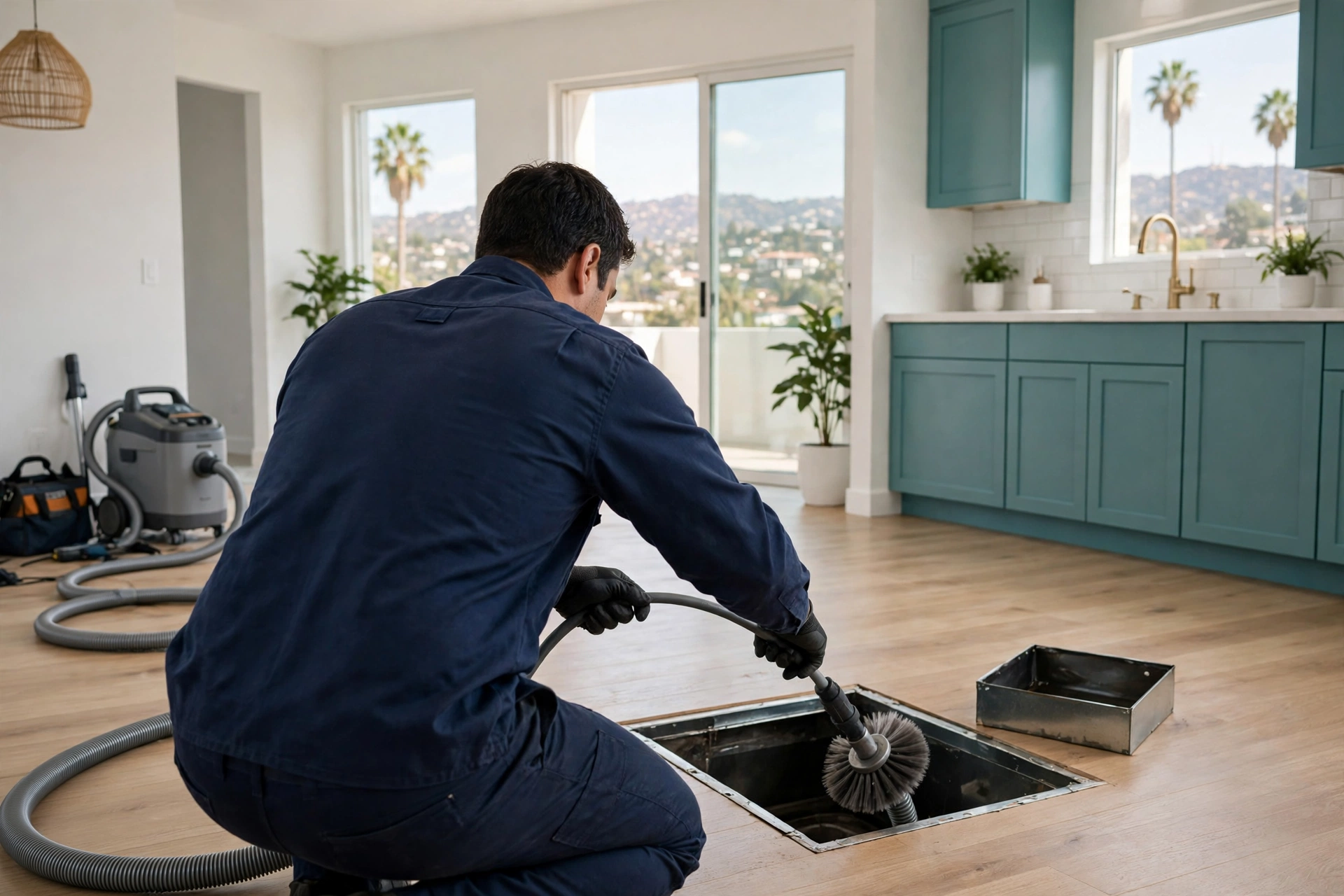 Eagle Rock, CA — air duct cleaning
Eagle Rock is the emptiest city market in the set: the Los Angeles Eagle Rock organic search results have no local operator page at all — the Top 10 is out-of-state pages, directories and polluted listings from other states. A real cleaning with a camera inspection and before/after photos is not an incremental improvement here. It is the only local operator page in the city.
The housing stock is 1920s–40s homes and hillside properties along the Eagle Rock Blvd corridor — older ductwork, tight access, and a system that in most houses has never been inspected. The Occidental College area adds rental and multi-unit work to the residential base.
What Eagle Rock homes have in common
- Northeast LA
- Housing: 1920s–40s homes, hillside properties
- Local contaminant: foothill dust + valley air
- Corridor: Eagle Rock Blvd
- Typical full-system range: $280–$850
- Hours: Mon–Fri 9:00 AM–6:30 PM
Local quirks we see on every job
- The LA Eagle Rock organic Top 10 has NO local operator page — the emptiest city SERP in the set.
- 1920s–40s homes and hillside properties: tight access, older ductwork.
- Eagle Rock Blvd corridor mixes homes with small commercial.
- Occidental College area brings rental and multi-unit work.
- Foothill dust and valley air load the system the same as the rest of Northeast LA.
What a cleaning costs here
Typical market ranges for the Los Angeles area — your fixed price comes from the camera inspection, not from a phone guess.
| Full duct system | $280–$850 |
| Dryer vent cleaning | $100–$200 |
| Camera inspection | $120–$250 |
| Evaporator coil cleaning | $150–$380 |
Why Eagle Rock ducts get dirty
Age is the first factor: 1920s–40s homes with ductwork installed decades ago, much of it never opened. Galvanized runs, duct board, flex duct from the remodels — the camera inspection is often the first time anyone has seen inside them, and what it finds decides the job.
Hillside access is the second factor. Eagle Rock's hillside properties route ductwork through tight attics and crawlspaces that were never designed for access, and the runs are harder to reach and harder to clean well. A rotary brush on a full-length cable reaches the whole run; a blow-and-go from the register does not.
The third factor is the valley air itself: foothill dust, Santa Ana winds, and the smog and PM2.5 that settle over Northeast Los Angeles. The ducts accumulate all of it, year after year, and the system runs longer cycles as airflow drops.
What we clean in Eagle Rock
We clean the full system in Eagle Rock homes: supply and return runs, evaporator coil, blower wheel and air handler, with a camera inspection before and after and before/after photos for your records. Dryer vent cleaning on the same visit. Chimney sweeps for the wood fireplaces in the older stock, and attic insulation where the attic is the reason the air conditioning cannot keep up.
Multi-unit and rental work around Occidental College is priced per unit with a building rate, and scheduled with a posted schedule so every resident knows their time window.
- Residential air duct cleaning — supply and return runs, coil, blower, air handler
- Dryer vent cleaning — full run, roof or wall termination, airflow check
- Chimney sweep — creosote removal, camera flue inspection
- Attic insulation — blown-in, batts and spray foam, with air sealing
- HVAC filter replacement — MERV matched to the system
- Commercial duct cleaning — restaurants, historic buildings, multi-unit
How a cleaning works, step by step
Every job starts the same way: with a camera, not a sales pitch. We run an inspection camera through your supply and return runs and show you what is actually inside — dust loading, debris, disconnected joints, crushed flex duct, mold growth, or nothing at all. If the camera shows clean ducts, we tell you so and charge you nothing for the inspection. A cleaning that starts without an inspection is guesswork, and guesswork is how homeowners pay for work they never needed.
Source removal is the whole method. The NADCA ACR Standard — the industry standard every legitimate duct cleaner works to — defines cleaning as removing the contaminants from the system, not blowing them around inside it. We seal the system under negative air with a HEPA-filtered vacuum, then agitate each run with a rotary brush. The brush knocks dust, debris and biofilm off the duct walls while the negative air pulls it out of the house entirely. Nothing is pushed deeper into the system, and nothing is left floating in your living room.
The equipment matters, and it is the same on every job: a Rotobrush-style rotary agitation system for the runs, a Nikro HEPA negative-air machine holding the system under suction, and Abatement Technologies containment where a run is opened. Supply ducts and return ducts are cleaned separately — they collect different contaminants and they need different passes. The evaporator coil, blower wheel and air handler get cleaned as part of a full-system job, because a clean duct connected to a dirty coil just re-contaminates itself the first week.
Before we pack up, the camera goes back in. You see the after footage next to the before footage — same run, same angle — and you get the photos for your records. That is the whole proof model: a flat price agreed before work starts, a camera inspection before and after, and photos you can keep. If a run cannot be reached, or if we find damage that cleaning will not fix, we show you that too and quote the repair separately instead of burying it in the cleaning price.
- Camera inspection of supply and return runs — you see the footage
- System sealed under HEPA negative air (Nikro) before any agitation
- Rotary brush agitation of every accessible run, supply and return separately
- Evaporator coil, blower wheel and air handler cleaned on a full-system job
- Camera re-inspection and before/after photos for your records
Flat price per system — never per vent
A full-system air duct cleaning in Eagle Rock typically runs $280–$850, depending on how many systems your home has, how many runs are accessible, and how contaminated the system is. That is the typical market range published by local Los Angeles duct cleaners — your fixed price comes from the free camera inspection, and it is agreed before any work starts. We price per system, never per vent: per-vent pricing is the mechanism behind the $99 coupon that turns into $600 at your door, because every vent becomes another charge.
The range moves with five things: the number of HVAC systems, the number and length of duct runs, how accessible those runs are (attic and crawlspace access costs time), the contamination level (ordinary dust vs. post-fire ash or mold), and whether the coil, blower and air handler need cleaning too. A single-story ranch with one system and clean attic access sits at the low end. A two-story home with two systems, tight attic access and heavy ash loading sits at the high end. Either way you know the number before we start, and it does not change halfway through the job.
| Job | Typical market range |
|---|---|
| Full-system air duct cleaning | $280–$850 |
| Dryer vent cleaning | $100–$200 |
| Camera inspection / diagnostic | $120–$250 |
| Evaporator coil cleaning | $150–$380 |
| Blower wheel cleaning | $150–$325 |
| Supply duct, standalone | $150–$280 |
| Return duct, standalone | $120–$220 |
Typical market ranges in Los Angeles, as published by local competitors. Your fixed price is agreed after a free camera inspection — one flat price per system, never per vent.
Before/after photo proof, on every job
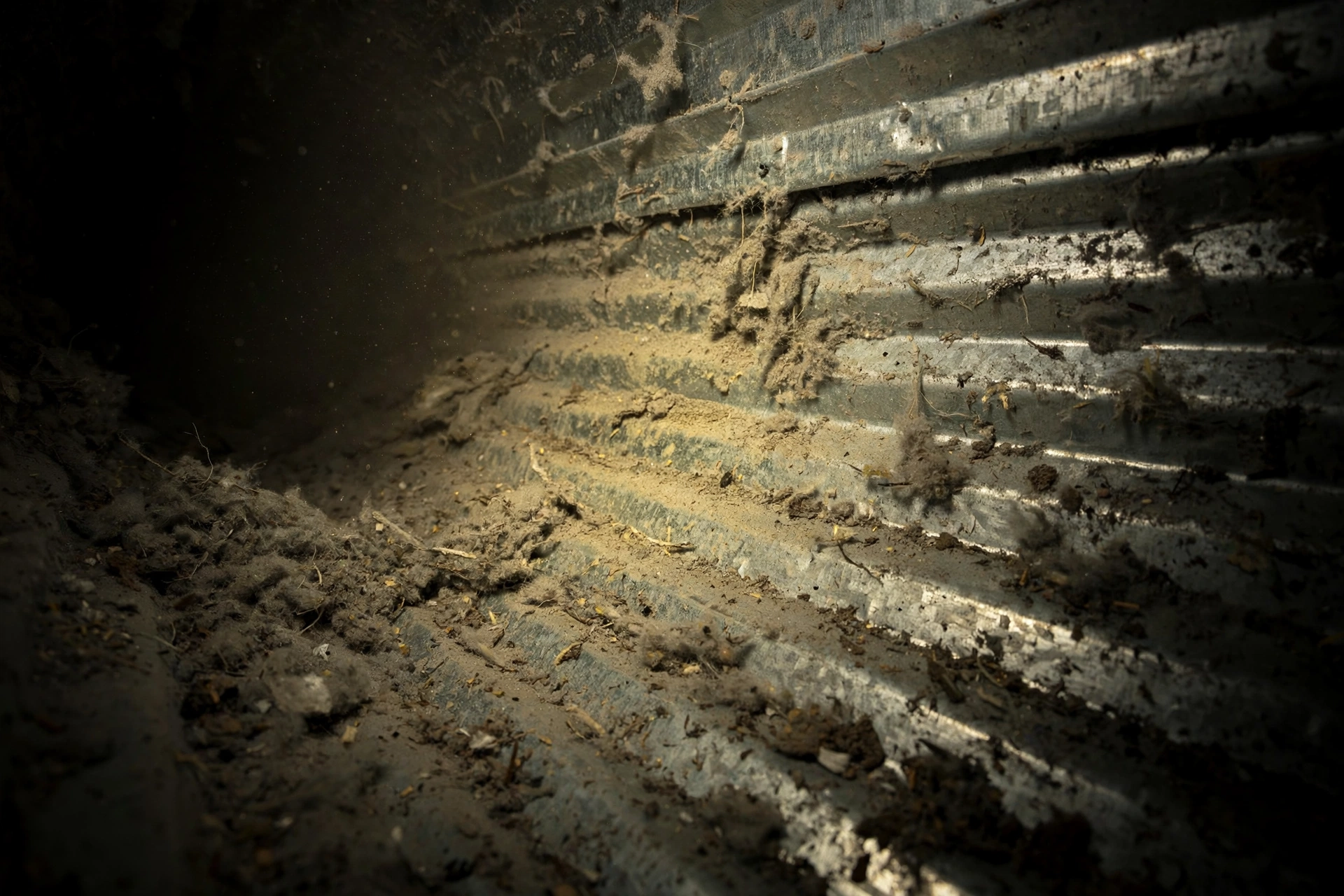
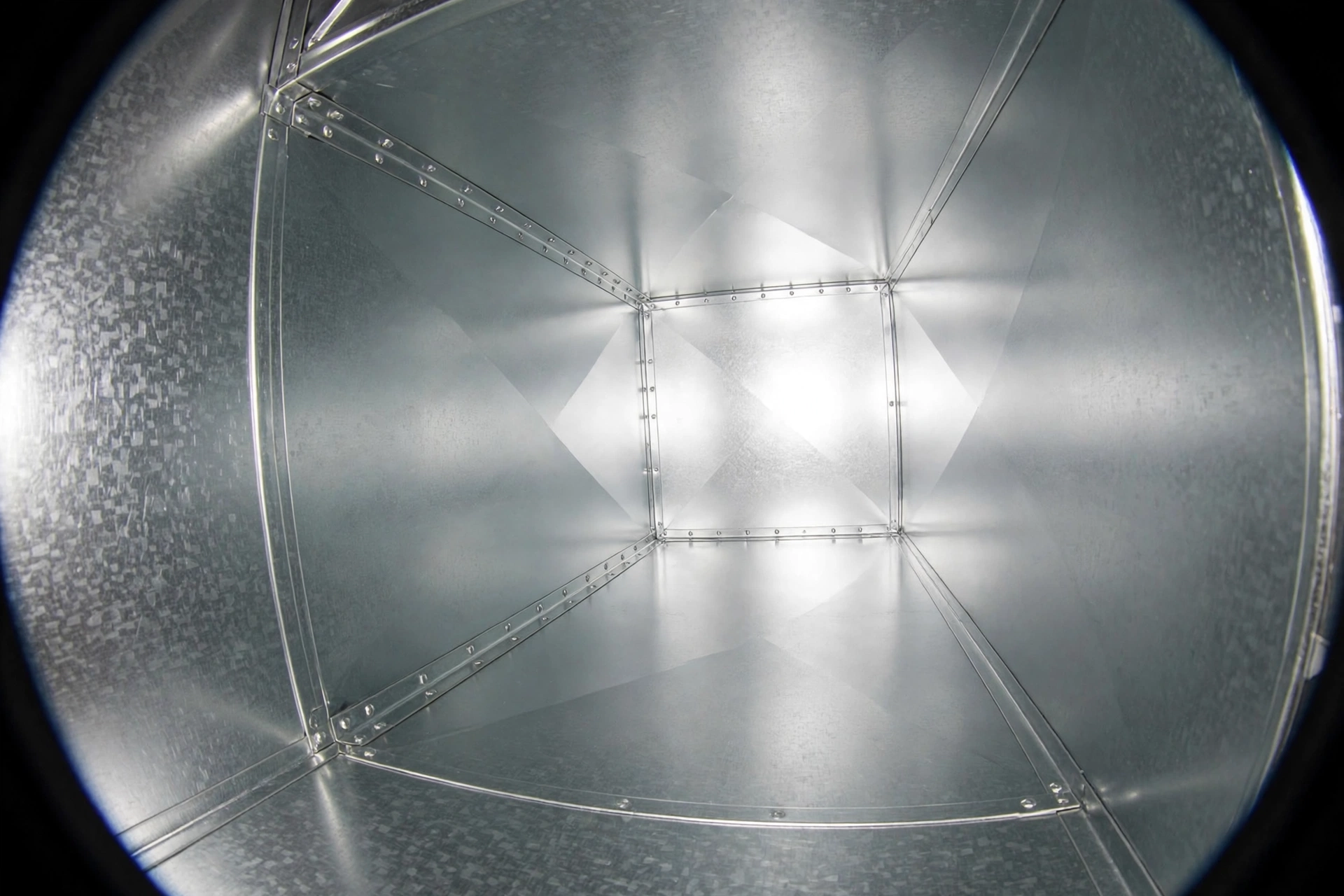
Duct cleaning is invisible work — once the registers go back on, you cannot see what was done. That is exactly why the camera matters. On every job we photograph the inside of your ducts before we start and after we finish, same run, same angle, with a timestamp. The before frame shows the dust loading and debris; the after frame shows clean metal. You keep the photos, and if you ever need them for an insurance claim — post-fire ash cleaning, for example — they are already in your inbox.
Ask any duct cleaner for before/after photos before you book. A company that cannot show you its last five jobs on camera is selling you a promise, not a cleaning. Our crews carry the camera on every truck, and the inspection is part of the job, not an upsell.
Your system report: what you take home in Eagle Rock
A cleaning that leaves no record is a cleaning you cannot verify, and a system you cannot verify is a system you will clean again blind. Every job ends with a system report: the before/after camera photos for every run, the readings from the inspection, and the next steps in writing. The photos are timestamped and labeled by run — SUPPLY RUN 3, RETURN, COIL, BLOWER — so you can match each before frame to its after frame and see exactly what changed.
The report also records the readings that decide the next cleaning: the filter size and MERV your system needs, the date of the cleaning, and the recommended interval — 3–5 years for the ducts, one year for the dryer vent. If the inspection found a repair — a disconnected joint, a crushed flex run, a coil that needs attention — the report lists it with the camera frame and the quote, so the next decision is made with evidence instead of memory.
Keep the report with the house. It is the duct history the next owner, the next inspector, or the next insurance claim will ask for — and it is the proof that the last cleaning was real, not a promise.
- Before/after camera photos, labeled by run
- Filter size and MERV, written down for the next change
- Cleaning date and recommended next interval
- Any repair found, with the camera frame and the quote
Dryer vent cleaning in Eagle Rock — same visit, same crew
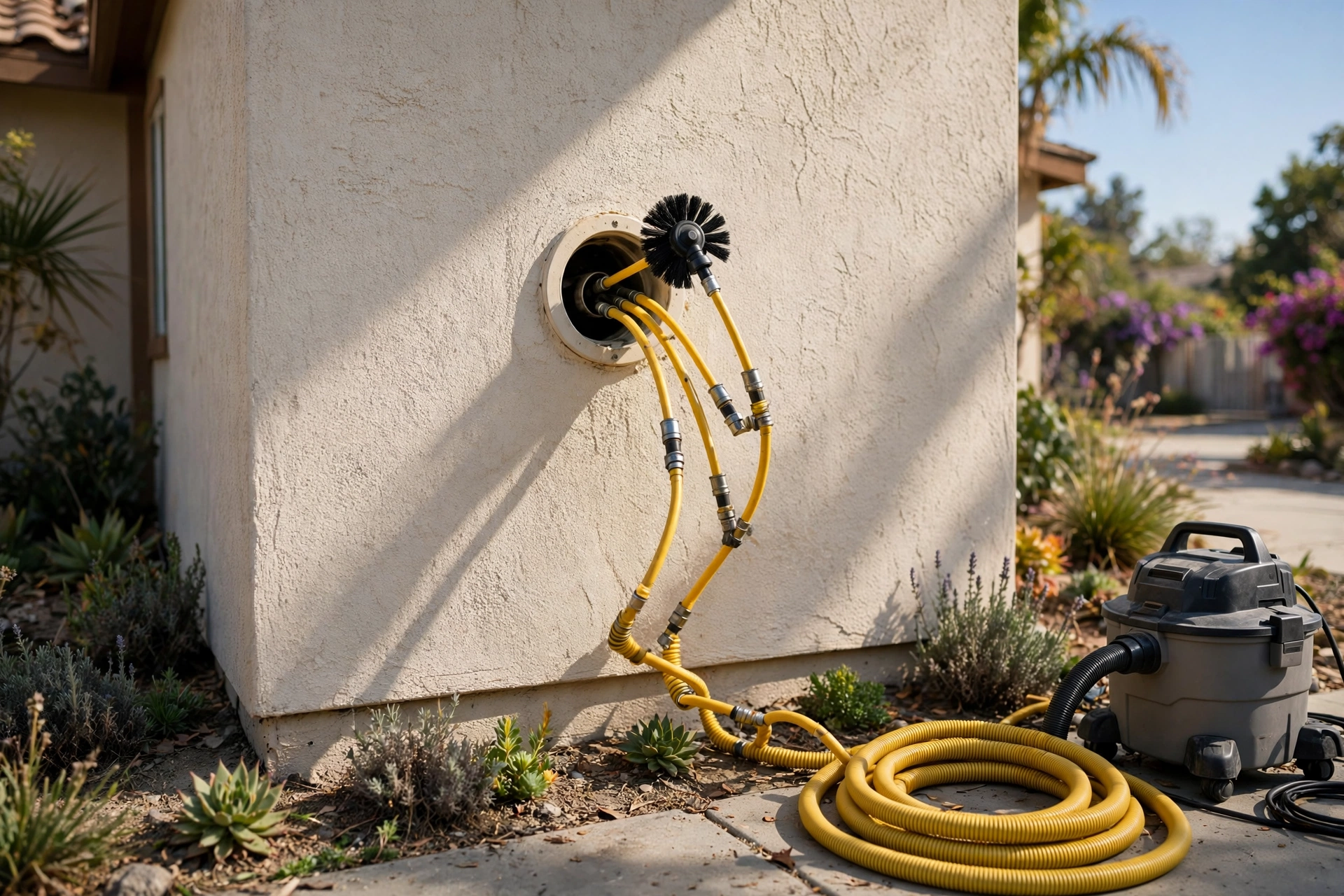
Most of our air duct jobs add a dryer vent cleaning on the same visit, because the two systems fail the same way: lint builds up where you cannot see it, airflow drops, and the dryer runs hotter and longer. A clogged dryer vent is the leading cause of dryer fires — lint is fuel, and a vent run packed with it turns a hot dryer into an ignition source. The warning signs are a dryer that takes two cycles, a laundry room that feels hot, or a burning smell when the dryer runs.
We clean the full vent run, not just the lint trap: rotary brush and negative air from the dryer to the termination, roof or wall, with an airflow check before and after. If the run is crushed, disconnected, or chewed by rodents, we show you on camera and quote the repair — a crushed foil hose is replaced with rigid metal venting, never another foil hose. Dryer vent cleaning typically runs $100–$200 in Los Angeles; as an add-on to a duct cleaning it is the cheapest fire prevention you will ever buy.
Eagle Rock housing stock: what lives in your ducts
Eagle Rock's homes are Northeast Los Angeles at its most characteristic: 1920s–40s houses on hillsides and along the boulevard, with a mix of architectural styles and a mix of ductwork to match. The camera inspection is the tool that makes sense of it — one house may have sound galvanized runs that just need cleaning, the next may have a disconnected joint that has been dumping air into the wall for a decade. The inspection decides, and the quote follows the inspection.
Nearby areas we serve
From Eagle Rock we serve Highland Park, Pasadena and Glendale directly, and the rest of the San Gabriel Valley and Northeast Los Angeles from the Pasadena shop. Same crew, same camera, same flat price per system.
The camera doesn’t lie
Every job gets a camera inspection before and after — and before/after photos you keep. Drag the handle.
Get your Eagle Rock inspection
Tell us about your home and what you are noticing. We will show you the camera footage and give you one flat price for the whole system.
Frequently asked questions
How much does air duct cleaning cost in Eagle Rock?
Is there a local air duct cleaner in Eagle Rock?
How often should air ducts be cleaned?
How much does air duct cleaning cost in Los Angeles?
How often should air ducts be cleaned?
Will my house be dusty after duct cleaning?
What else we do
 Dryer Vent Cleaning
 in Los Angeles
Lint builds up where you cannot see it, airflow drops, and the dryer runs hotter and longer. We clean the full vent run — dryer to termination — with a rotary brush and negative air, and check the airflow before and after.
Learn more →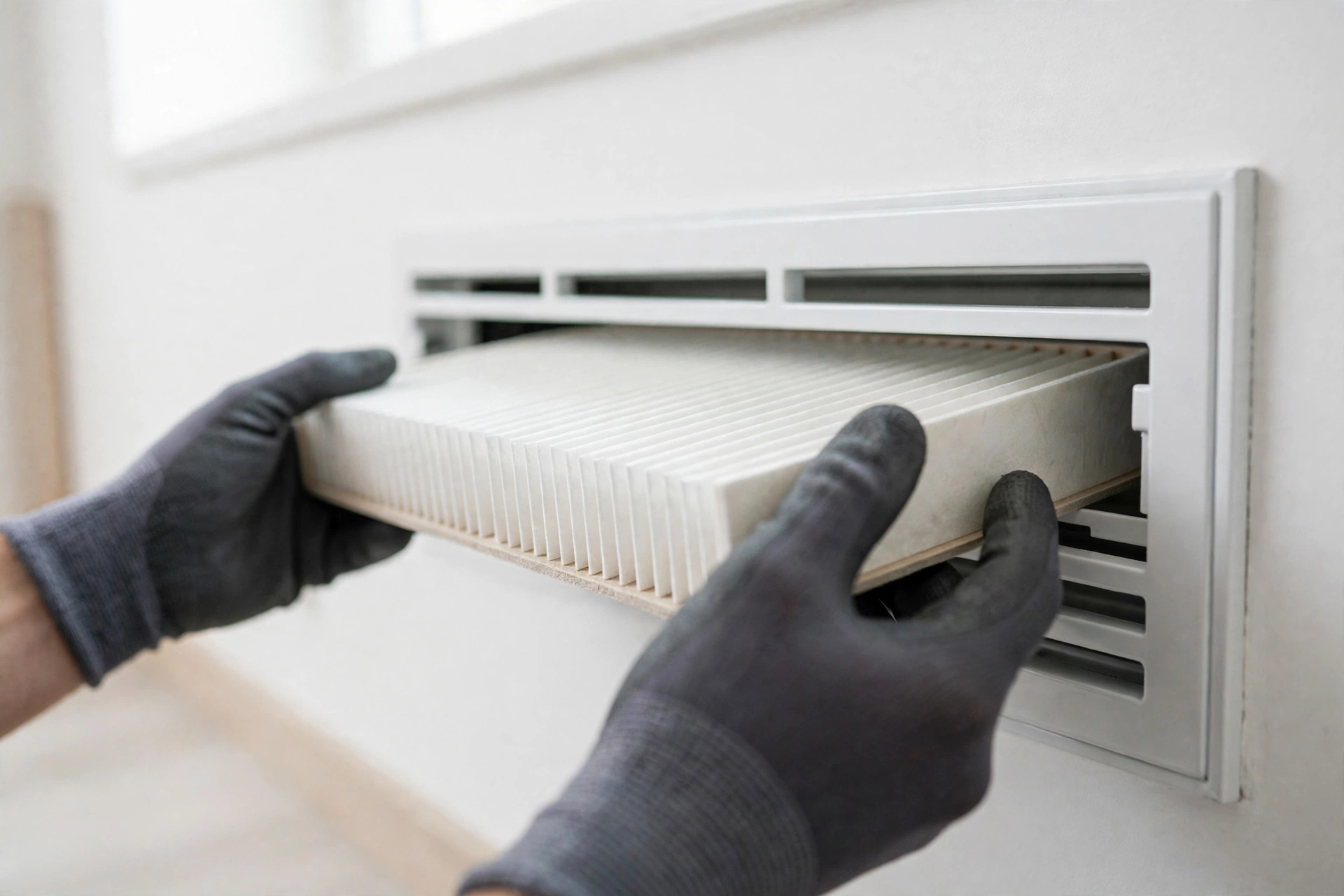 Filter Replacement
HVAC Air Filter Replacement
The cheapest part in your HVAC system is also the one that chokes it most often. We replace filters, explain MERV ratings honestly, and do it as part of a duct cleaning — or on its own.
Learn more → Radon Testing Radon Testing in Los Angeles
Radon has no smell, no color and no taste — and it is the second leading cause of lung cancer. The only way to know your number is to test. We test, we explain the result, and we mitigate when it is high.
Learn more →