Chimney Sweep in Los Angeles — Creosote Out, Fire Risk Down
Creosote is the fuel, the flue is the chimney, and a sweep is the only thing standing between the two. We sweep, inspect with a camera, and repair — wood, gas and inserts.
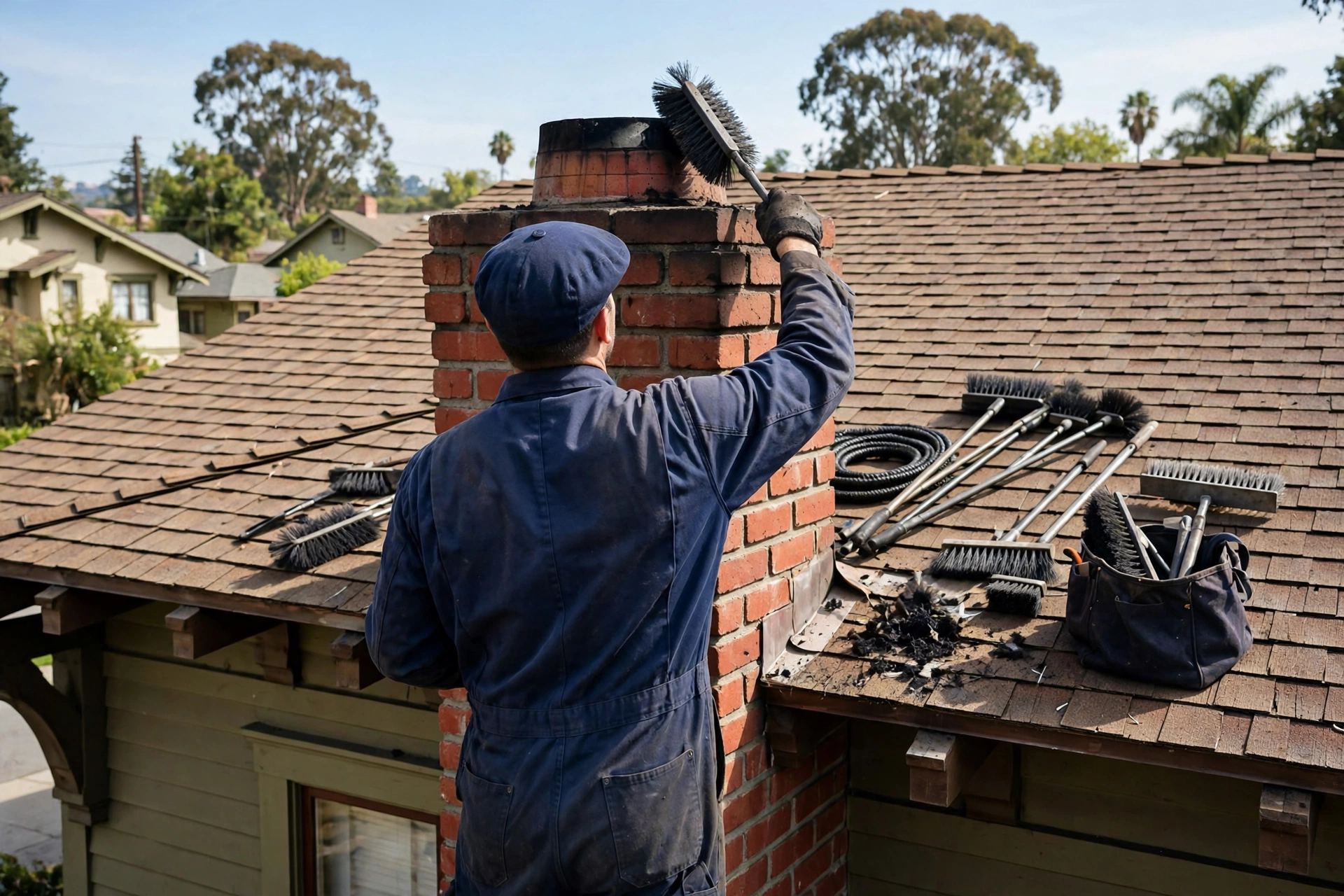 Chimney Sweep in Los Angeles
A chimney is a fire that you light inside your house on purpose, several times a winter, and trust a vertical shaft of brick and mortar to contain. That trust is only justified if the shaft is clean. Every wood fire leaves creosote on the flue walls — a tar-like deposit that is, by weight, one of the most flammable substances in a home. A chimney fire is not a slow event: creosote ignites, the flue becomes a blowtorch, and the fire spreads to the framing around the chimney in minutes.
Los Angeles chimneys have their own problems. Many are in pre-WWII homes — Craftsman bungalows in Pasadena and Highland Park, Spanish Colonial homes in Hollywood — with flues that have never been lined to a modern standard, crowns that have cracked in decades of sun, and caps long gone, which means animal nests and debris. Gas fireplaces have a different failure mode: they look clean, so nobody sweeps them, while the flue corrodes and the damper seizes. A sweep is not a luxury service for a fireplace you use twice a year. It is the inspection that tells you whether the twice-a-year fire is safe.
What a chimney sweep includes
- Full flue sweep — brush and rotary cleaning, top to bottom
- Camera flue inspection before and after
- Creosote stage assessment — 1, 2 or 3, and what it means
- Damper, cap and crown check
- Firebox cleaning and ash removal
- Repair quote with camera footage if the flue is damaged
What it costs
Typical market ranges for the Los Angeles area — your fixed price comes from the camera inspection, not from a phone guess.
| Full duct system | $280–$850 |
| Dryer vent cleaning | $100–$200 |
| Camera inspection | $120–$250 |
| Evaporator coil cleaning | $150–$380 |
What a chimney sweep actually removes
Creosote, in three stages — and the stage is everything. Stage 1 is a light, flaky soot that brushes off easily; it is what a well-burned fire leaves behind and what a routine sweep removes. Stage 2 is a crunchy, tarry deposit that needs aggressive brushing and scraping. Stage 3 is a glazed, shiny coating that is almost pure fuel and nearly impossible to remove with a brush alone — it needs chemical treatment or a rotary cleaning system, and it is the stage that causes chimney fires.
The sweep removes all three, plus the rest of what lives in a flue: soot, ash, bird nests and animal debris, leaves blown in through an uncapped flue, and the deteriorated mortar and brick fragments that fall from an aging flue liner. The camera inspection after the sweep shows the flue walls clean and, just as importantly, shows whether the liner is cracked, whether the crown is failing, and whether the damper seals — the things that decide whether the chimney is safe to use, not just clean.
Sweep vs inspection vs repair — three different jobs
A sweep removes deposits. An inspection finds problems. A repair fixes them. They are three different jobs, and a company that sells you one when you need another is wasting your money. A sweep is the right job when the flue is sound and just dirty. An inspection — a Level 2 camera inspection, in NFPA 211 terms — is the right job when you have bought a house with a fireplace you have never used, when the chimney has had a fire, or when the sweep finds damage. A repair is the right job when the inspection finds a cracked liner, a failed crown, a seized damper, or missing mortar.
We do all three, and we tell you which one you need after the camera goes in — not before. A sweep that finds a cracked flue liner is not a completed sweep; it is a sweep plus a repair quote, with the camera footage to prove it.
The 3-to-10 rule, explained
The 3-to-10 rule is the building code rule for chimney height: the chimney must extend at least 3 feet above the point where it passes through the roof, and at least 2 feet above anything — roof ridge, dormer, tree line — within 10 feet horizontally. It is the rule that keeps the chimney drafting properly and keeps sparks and embers from landing on the roof. A chimney that is too short does not draft: smoke spills into the room, the fire burns poorly, and creosote builds up faster because the flue never gets hot enough to burn clean.
Short chimneys are common in Los Angeles, where additions, re-roofing and second stories have changed rooflines around chimneys that were built to the old roof. If your fireplace smokes into the room every time you light it, the height — not the sweep — is usually the problem, and the fix is extending the flue, not sweeping it more often.
Signs your chimney needs sweeping
The signs are the same ones a fire inspector looks for: a strong, smoky odor from the fireplace when it is not in use, a black, tarry deposit visible at the top of the flue, smoke spilling into the room when you light a fire, a fire that is hard to start or keeps dying, animals or debris in the flue, or a white staining — efflorescence — on the outside brick, which means water is getting into the masonry. If you cannot remember the last sweep, it is due: a wood fireplace used regularly needs sweeping every year.
- Smoky odor from the fireplace when it is not in use
- Black, tarry deposits visible in the flue
- Smoke spilling into the room on lighting
- Fires that are hard to start or keep dying
- Animal nests, leaves or debris in the flue
- White staining (efflorescence) on the outside brick
What a sweep costs in Los Angeles
A standard chimney sweep in Los Angeles typically runs in the same range as a duct cleaning visit, and it is quoted after the camera inspection — the flue's condition decides the price, not a phone script. A routine sweep of a sound flue is the low end. A Stage 3 glazed creosote removal, a repair, or a flue extension is quoted separately, with camera footage, before any work starts. The inspection itself is free with the sweep.
How often should you clean your chimney?
Every year if you burn wood regularly — that is the CSIA and NFPA 211 guidance, and it is the schedule that keeps creosote at Stage 1, where a brush removes it easily. Gas fireplaces need an inspection every year and a sweep when the inspection finds soot, corrosion or a blocked flue — gas burns cleaner, but a gas flue still corrodes and still collects debris, and a blocked gas flue spills carbon monoxide into the house instead of smoke. If you use the fireplace twice a year, inspect annually and sweep when the camera says so.
Fireplace types we sweep
Wood-burning fireplaces, gas fireplaces and inserts, and freestanding stoves — each with its own flue, its own creosote profile, and its own inspection. Wood fireplaces get the full sweep and creosote treatment. Gas fireplaces get an inspection-led service: flue condition, damper operation, burner and pilot check, and a sweep only when the inspection finds deposits. Inserts get the flue and the connector pipe, where most of the creosote actually accumulates.
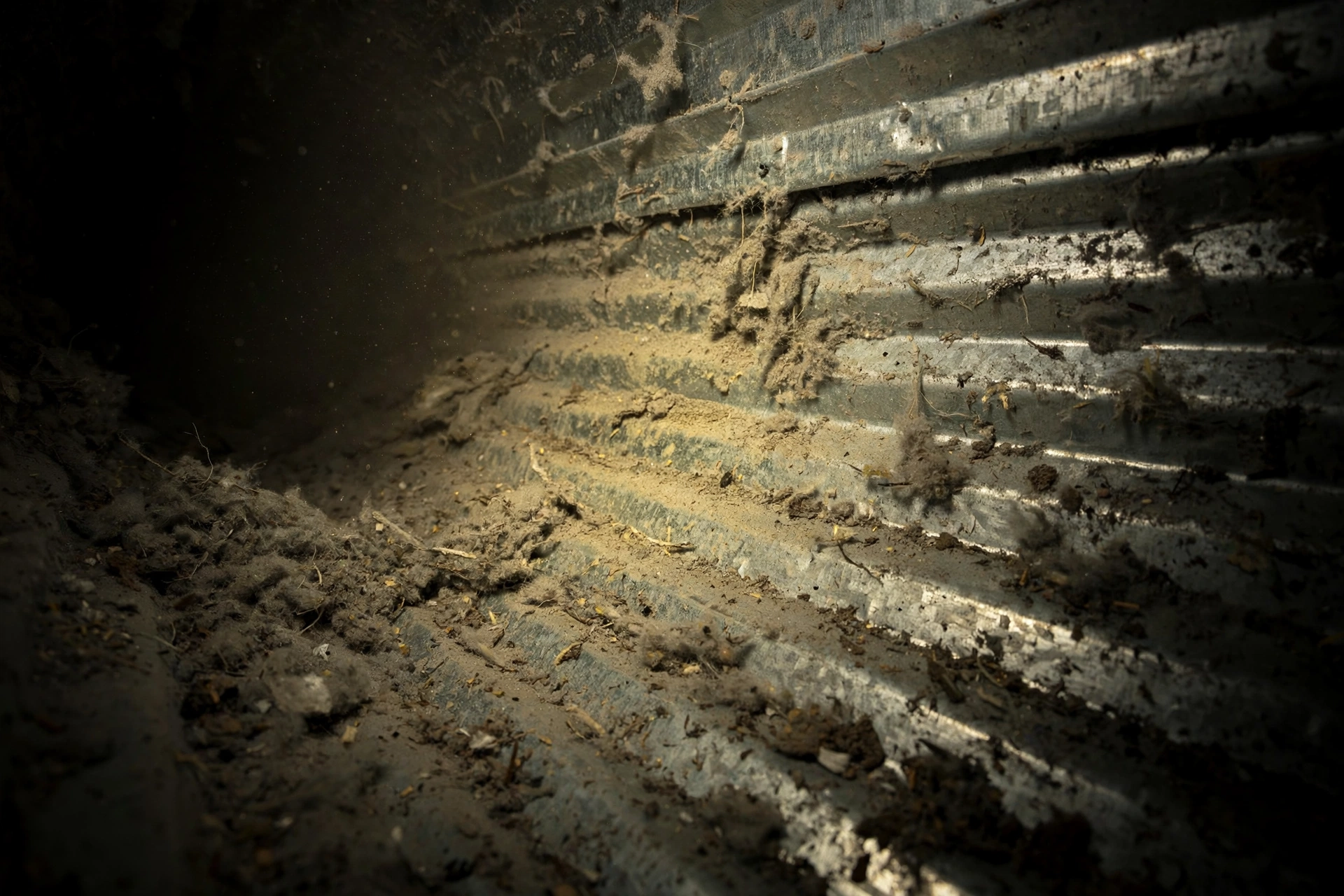
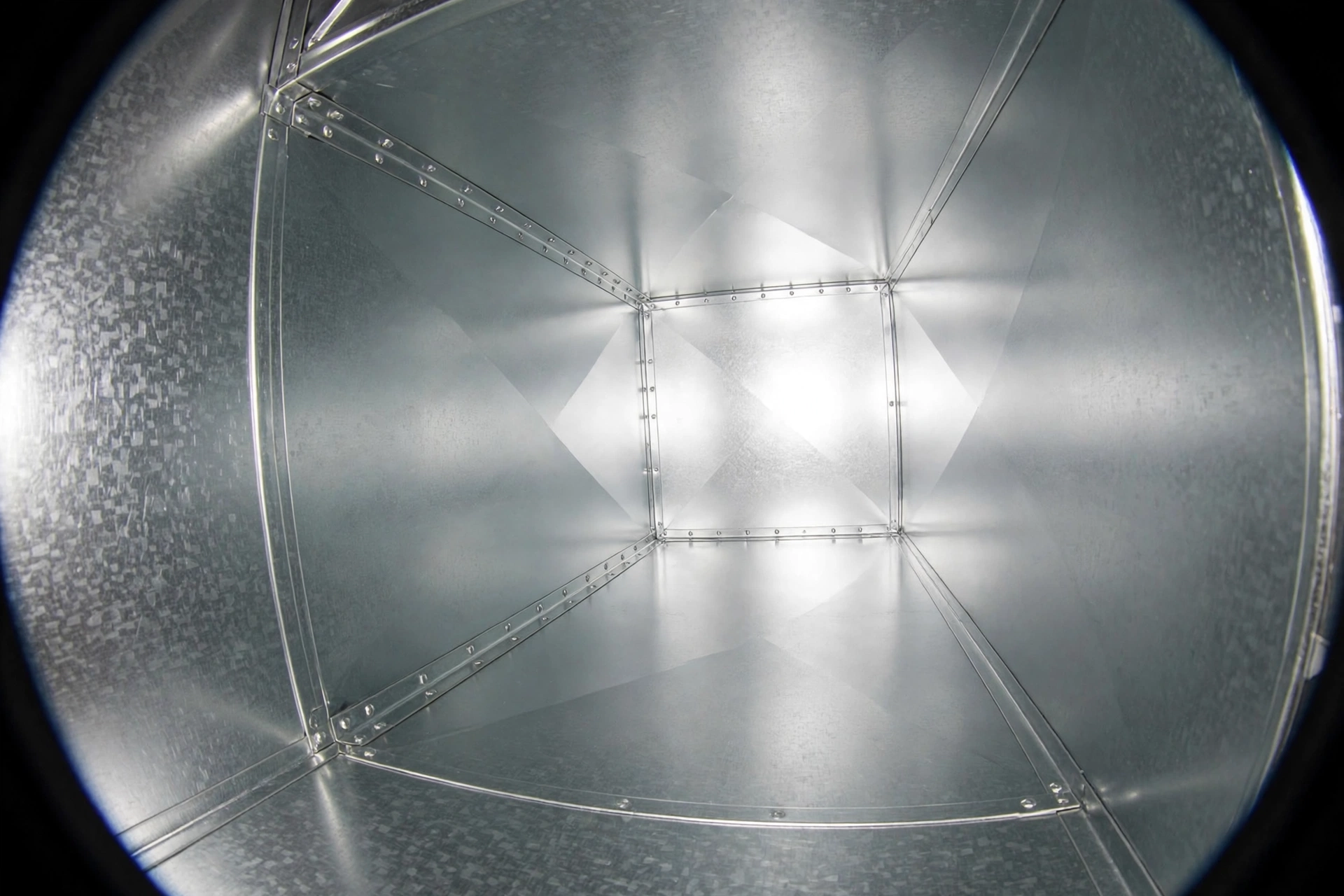
The camera doesn’t lie
Every job gets a camera inspection before and after — and before/after photos you keep. Drag the handle.
Get your free inspection
Tell us about your home and what you are noticing. We will show you the camera footage and give you one flat price for the whole system.
Frequently asked questions
How much should chimney sweeping cost?
What is the 3 to 10 rule for chimneys?
Are chimney sweeps still a thing?
How often should you clean your chimney?
What else we do
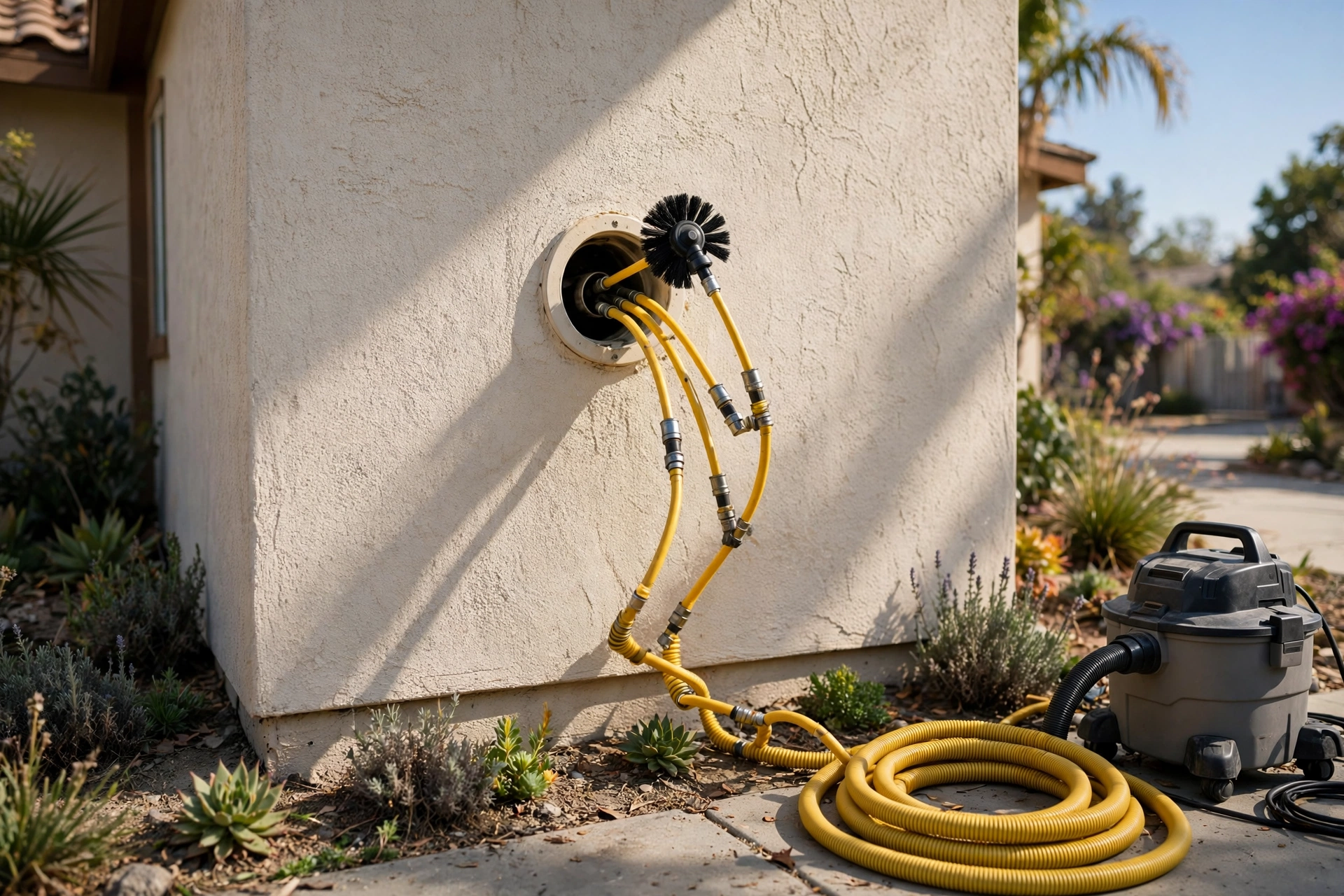 Dryer Vent Cleaning
 in Los Angeles
Lint builds up where you cannot see it, airflow drops, and the dryer runs hotter and longer. We clean the full vent run — dryer to termination — with a rotary brush and negative air, and check the airflow before and after.
Learn more → 2026 Price Guide How Much Does Air Duct Cleaning Cost
The short answer: a full-system cleaning in Los Angeles typically runs $280–$850. The long answer — what moves the price, what the add-ons cost, and how to spot the $99 trap — is below.
Learn more →