HVAC Air Filter Replacement in Los Angeles
The cheapest part in your HVAC system is also the one that chokes it most often. We replace filters, explain MERV ratings honestly, and do it as part of a duct cleaning — or on its own.
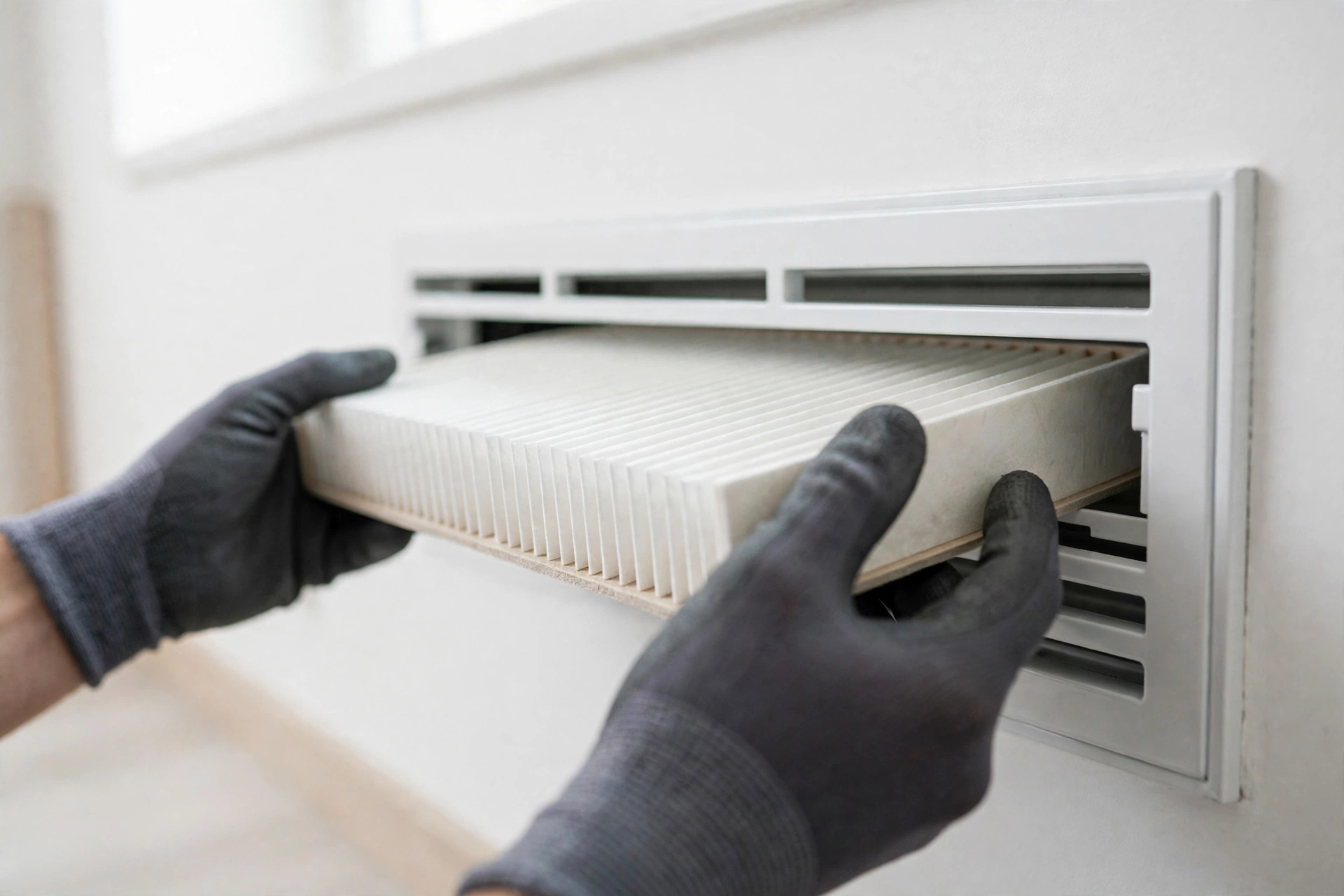 HVAC Air Filter Replacement
A filter is a compromise: it has to catch enough to protect your lungs and your equipment, and let through enough air that the system can breathe. Get the compromise wrong in either direction and something breaks — too open, and dust coats the coil and the ducts; too restrictive, and the system starves for air, runs longer, and burns out its blower motor. Most Los Angeles homes get it wrong in one direction or the other, because nobody ever explained MERV ratings to them.
Filter replacement is a small job with an outsized effect, and it is the one piece of HVAC maintenance a homeowner can genuinely do themselves. This page explains which filter your system needs, how often to change it, and the steps to do it right — and when to have us do it as part of a duct cleaning instead.
What a filter visit includes
- Filter size and MERV matched to your system
- Old filter removed and disposed of
- Filter slot and return grille inspected
- Airflow direction verified — arrow toward the blower
- Size and MERV written down for your next change
- Done with a duct cleaning, or on its own
What it costs
Typical market ranges for the Los Angeles area — your fixed price comes from the camera inspection, not from a phone guess.
| Full duct system | $280–$850 |
| Dryer vent cleaning | $100–$200 |
| Camera inspection | $120–$250 |
| Evaporator coil cleaning | $150–$380 |
Which filter does your system need?
MERV — Minimum Efficiency Reporting Value — is the rating that matters, and it runs from 1 to 16 for residential filters. MERV 8 catches dust, pollen and lint: the baseline, and the right choice for most homes with no allergy concerns. MERV 11 catches smaller particles, including mold spores and pet dander, with a modest pressure drop. MERV 13 catches smoke, bacteria and fine particles — the right choice for allergy households and post-wildfire ash — but it restricts airflow more, and an older system with a weak blower will struggle with it.
HEPA is a different category: true HEPA filters catch 99.97% of particles at 0.3 microns, but they are too restrictive for a standard residential system and need a dedicated HEPA unit or a system designed for them. Electrostatic filters are washable and reusable, but they catch less than a pleated filter of the same size and they need regular washing to keep working. The right filter is the highest MERV your system can breathe through without strain — and the inspection tells you which one that is.
| MERV rating | Catches | Best for |
|---|---|---|
| MERV 8 | Dust, pollen, lint | Most homes — the baseline |
| MERV 11 | Mold spores, pet dander | Allergy households, pets |
| MERV 13 | Smoke, bacteria, fine particles | Allergies, post-wildfire ash |
| HEPA | 99.97% at 0.3 microns | Dedicated HEPA units only |
Higher MERV is not automatically better — it restricts airflow, and an older blower may not handle it.
How often to change it
Every 1–3 months for a standard pleated filter — 1 month if anyone in the house has allergies, if there are pets, or if the system runs constantly in summer; 3 months for a lightly used system in a home without pets or allergies. After wildfire smoke or ash exposure, change it immediately, whatever the schedule says: a filter loaded with ash is a filter that is not filtering. The test is simple: hold the filter up to a light. If you cannot see light through it, it is done.
Can you replace it yourself?
Yes — it is the one HVAC job that is genuinely DIY, and it takes five minutes. Turn the system off first: a running system pulls air — and your fingers — toward the blower. Find the filter slot, usually at the return air grille or at the air handler. Note the size printed on the old filter's frame and the airflow arrow direction. Slide the old filter out, slide the new one in with the arrow pointing toward the blower (toward the furnace or air handler, not toward the room), and turn the system back on.
The two mistakes are the size and the direction. A filter that is the wrong size leaves a gap — and air takes the gap, bypassing the filter entirely. A filter installed backwards loads up on the wrong side and restricts airflow sooner. Both are fixed by reading the frame: size on the edge, arrow toward the blower.
- Turn the system OFF before touching the filter
- Read the size printed on the old filter's frame
- Note the airflow arrow — it points toward the blower
- Slide the new filter in, arrow toward the furnace/air handler
- Turn the system back on and check for rattling or whistling
Signs your filter is choking your system
Weak airflow from the registers, rooms that never reach temperature, a system that runs constantly, a musty smell when the system starts, or a filter that is visibly grey and bowed inward from suction — all of them mean the filter is loaded and the system is starving. A bowed filter is the clearest sign: the blower is pulling so hard against the restriction that it deforms the frame. Change it, and check the size and MERV — a filter that loads up in three weeks is either the wrong MERV or the wrong size.
Filter replacement as part of a duct cleaning
A new filter in a dirty duct system is a clean filter in a dirty system — it loads up fast and the coil keeps re-contaminating. That is why filter replacement is included in every full-system duct cleaning: the ducts, the coil, the blower and the filter are cleaned or replaced together, and the system starts clean. After a cleaning, the filter schedule restarts from zero, and we leave you with the right size and MERV written down so the next change is a five-minute job.
The camera doesn’t lie
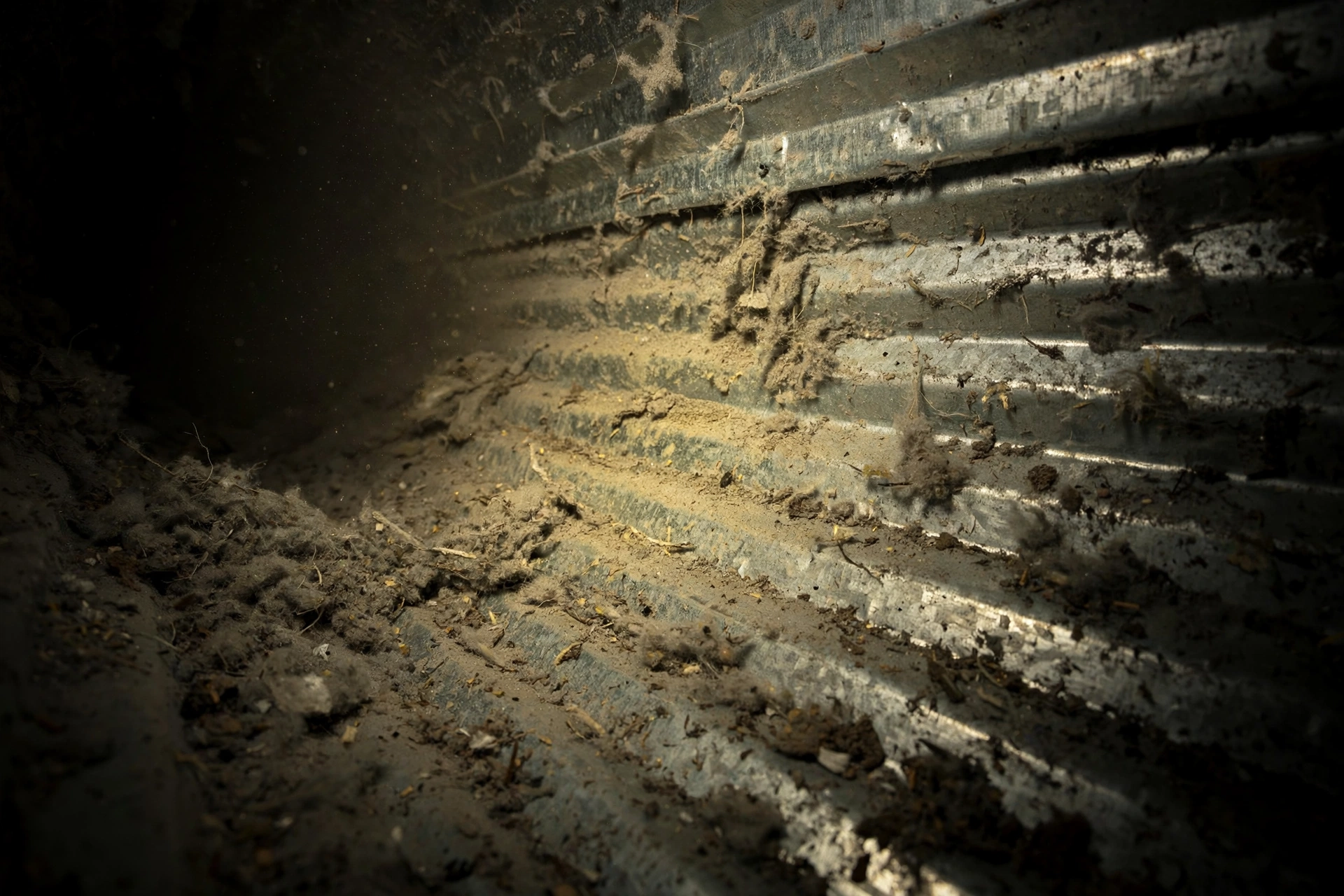
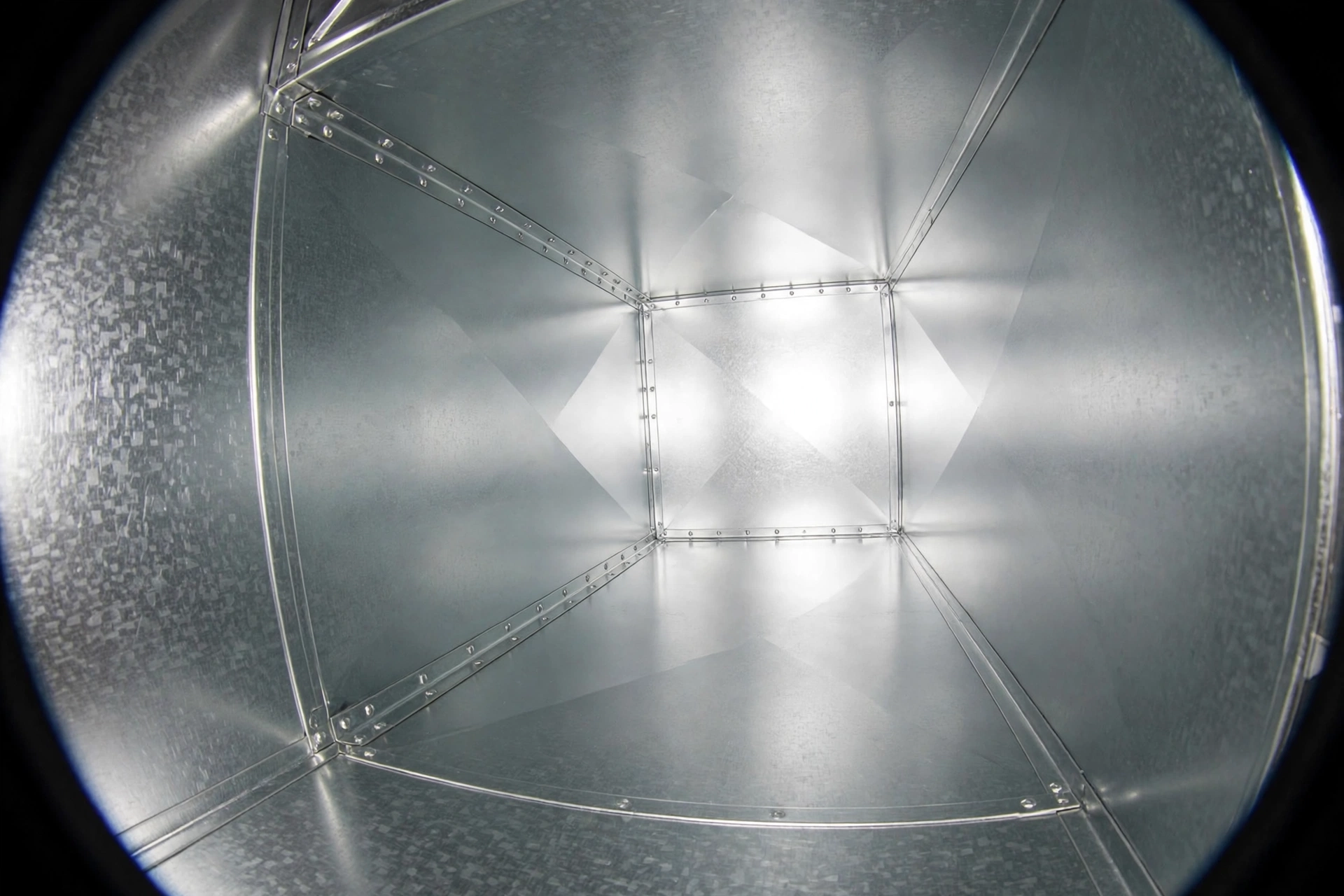
Every job gets a camera inspection before and after — and before/after photos you keep. Drag the handle.
Get your free inspection
Tell us about your home and what you are noticing. We will show you the camera footage and give you one flat price for the whole system.
Frequently asked questions
How often should an air filter be replaced on a HVAC system?
Can you replace HVAC filters yourself?
How much does it cost to replace a HVAC filter?
Do you have to turn off HVAC before changing filter?
What else we do
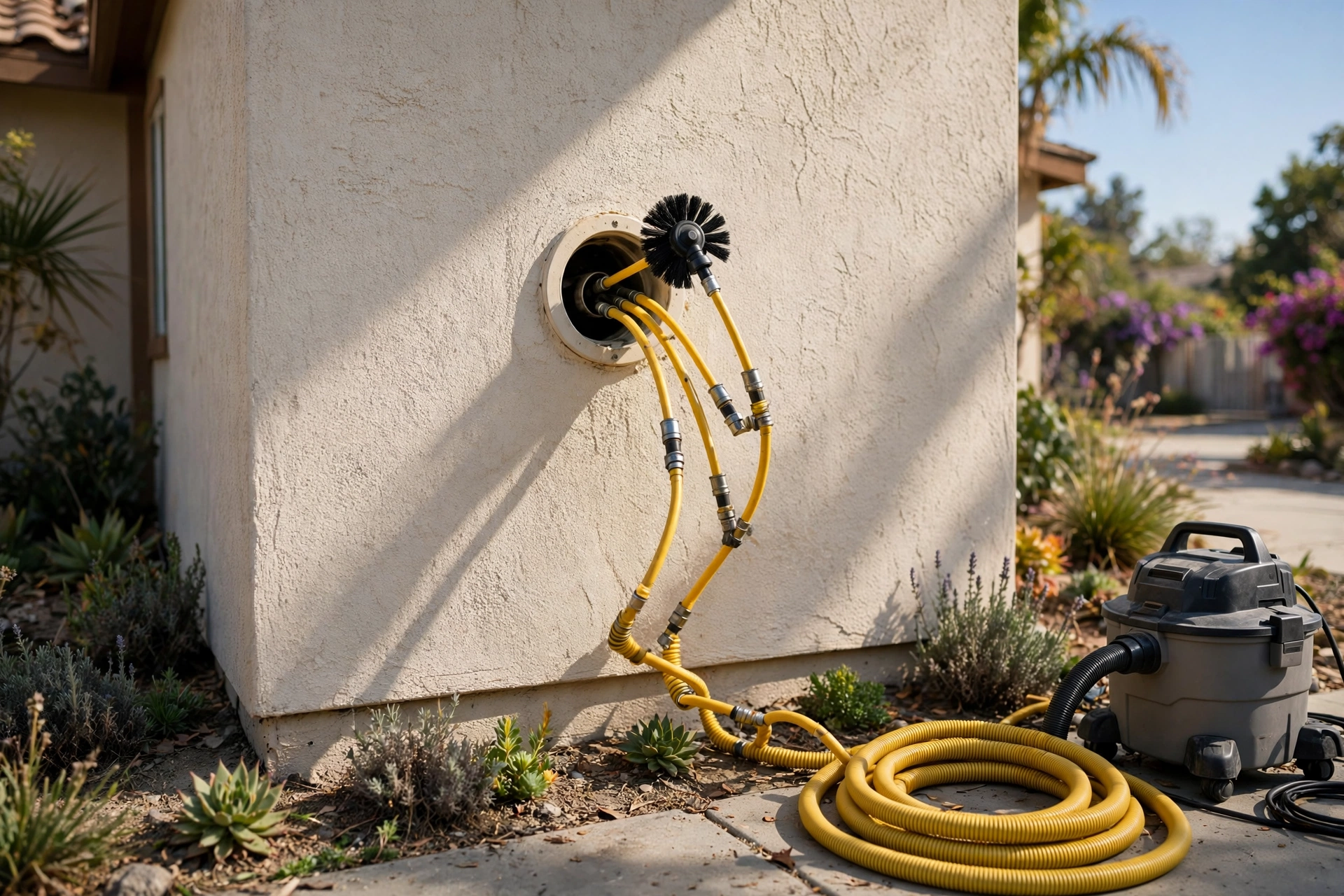 Dryer Vent Cleaning
 in Los Angeles
Lint builds up where you cannot see it, airflow drops, and the dryer runs hotter and longer. We clean the full vent run — dryer to termination — with a rotary brush and negative air, and check the airflow before and after.
Learn more → 2026 Price Guide How Much Does Air Duct Cleaning Cost
The short answer: a full-system cleaning in Los Angeles typically runs $280–$850. The long answer — what moves the price, what the add-ons cost, and how to spot the $99 trap — is below.
Learn more →