How Often Should You Clean Your Dryer Vent?
Once a year, minimum. Lint is fuel, the vent run is where it accumulates, and a clogged dryer vent is the leading cause of dryer fires. The signs, the schedule and the honest DIY limits are below.
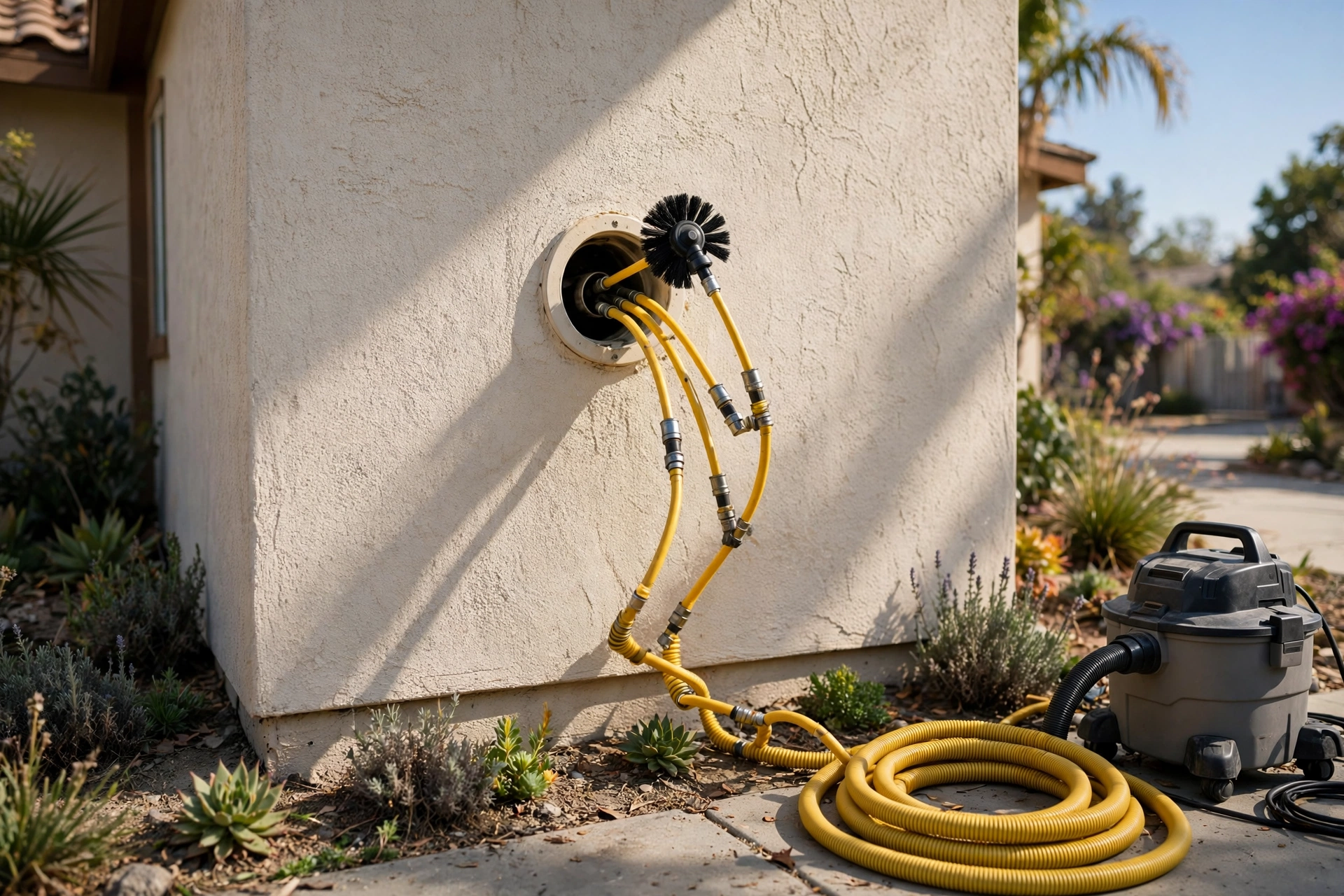
Your lint trap catches a fraction of what your dryer produces. The rest coats the vent run, foot by foot, year by year — and the vent run is the one place in the house where lint, heat and restricted airflow meet. The schedule is simple: once a year, minimum. The warning signs are the override: any one of them means the cleaning is due now, whatever the calendar says.
This post is the full answer: the annual schedule, the five warning signs, what a professional cleaning includes and how long it takes, the honest limits of doing it yourself, and the fire numbers that make the schedule non-negotiable.
The short answer: once a year
Once a year, minimum — more often if the household does a lot of laundry, if anyone uses fabric softener sheets (they coat the lint trap mesh and the run), or if the vent run is long or has several elbows. A long run accumulates faster than a short one, and a run with elbows accumulates at every bend. The annual schedule is the fire-service guidance, not a sales schedule: lint is fuel, and a year is long enough for a run to load up.
The calendar is the schedule; the warning signs are the override. Any one of the five signs below means the run is restricted now, and the cleaning is due now.
Five warning signs
Clothes that need two cycles to dry: the vent is restricted and the moist air cannot escape, so the dryer runs longer for the same load. A dryer that feels hot to the touch, or a laundry room that warms up when the dryer runs: the heat is not leaving the machine. A burning smell during the cycle: lint is scorching somewhere in the run. Lint collecting behind the dryer or around the hose connection: the run is leaking, or the connection has failed. And the outside vent flap that barely opens — or does not open at all: the run is blocked, and the dryer is pushing against a wall.
- Clothes need two cycles to dry
- The dryer feels hot, or the laundry room warms up
- A burning smell when the dryer runs
- Lint collecting behind the dryer or at the hose connection
- The outside vent flap barely opens — or does not open at all
What a pro cleaning includes (and how long it takes)
A professional cleaning covers the full vent run, dryer to termination, with a rotary brush and negative air — about 45 minutes to an hour for a standard run, including the inspection and the airflow check. The transition hose is inspected and the connection checked. The termination — roof cap or wall vent — is cleaned and the flapper checked. The airflow is measured before and after, so the improvement is a number, not a feeling.
If the run is damaged, the camera shows it and the repair is quoted separately: a crushed foil hose replaced with rigid metal venting, a rodent-chewed section replaced, a disconnected joint reconnected. No repair is ever done without showing you the camera footage first.
Can you DIY it? The honest limits
Yes, partly. A brush kit from the hardware store reaches ten or fifteen feet — enough for a short straight run, and a genuine improvement over doing nothing. It is not enough for a long run, a run with elbows, or a vertical rise to a roof termination, and it cannot measure airflow or show you the inside of the run on camera. The DIY kit is maintenance between professional cleanings, not a replacement for them — the same way the lint trap is maintenance, not cleaning.
The other DIY limit is the termination. A roof cap clogged with lint needs a ladder, a brush, and a willingness to work on a roof — and a wall vent with a stuck flapper needs to be checked from outside. The professional cleaning covers both ends of the run, not just the dryer end.
The fire numbers
Dryer fires are the risk the schedule exists for, and the mechanism is straightforward: lint accumulates, airflow drops, the dryer overheats, and the lint ignites. The vent run carries the fire into the wall or the roof, and a fire that starts inside a wall is a fire that is already spreading before anyone smells smoke. The annual cleaning removes the fuel. The airflow check proves the run is clear. The cost is a fraction of a fire — and the schedule is once a year, not once a decade.
Want us to look at yours?
A camera inspection tells you in 20 minutes what your ducts actually look like — free, no obligation, and you keep the footage.
Frequently asked questions
How long does it take a professional to clean a dryer vent?
Can I clean my dryer vent myself?
Does Lowes do dryer vent cleaning?
Can a handyman clean a dryer vent?
Dryer Vent Cleaning in Los Angeles
Where we work
Keep reading
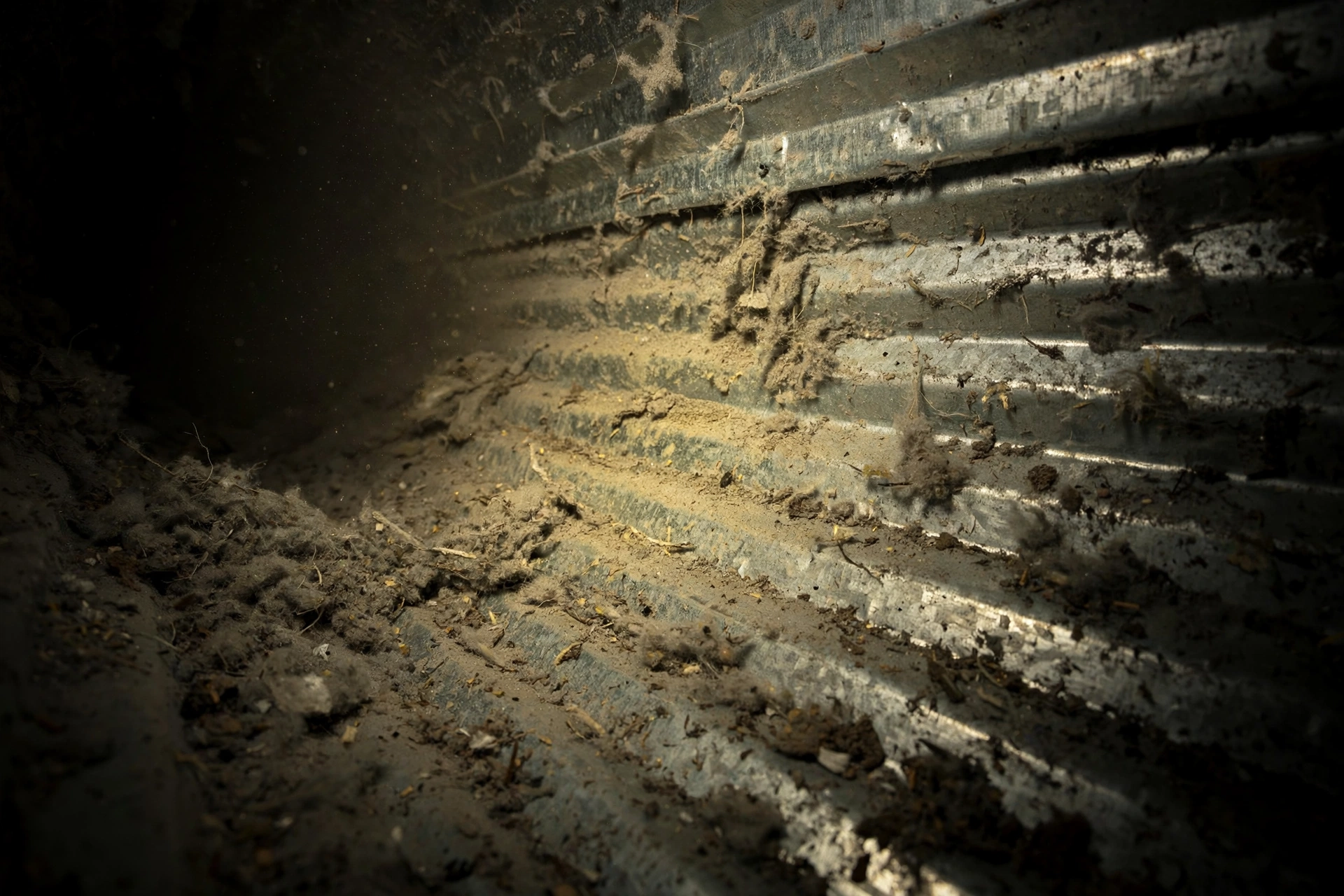
Is Duct Cleaning a Waste of Money?
The EPA says routine cleaning is not proven necessary for every home. It also says cleaning is worth it when there is a reason. This post is the reason list — and the scam list.
Read the guide →
How Often Should Air Ducts Be Cleaned
The short answer is 3–5 years. The real answer is: it depends on what has happened to your house since the last cleaning — and Los Angeles gives your ducts more to deal with than most cities.
Read the guide → How Much Does Dryer Vent Cleaning Cost
The short answer is $100–$200 for a standard run. The price moves with the run length, the elbows, and whether the termination is on the roof or a wall — and the fire-safety math makes it the cheapest prevention you will ever buy.
Read the guide →